Views: 0 Author: Site Editor Publish Time: 2026-01-19 Origin: Site


In the grand picture of modern manufacturing and processing industries, countless raw materials undergo a series of precise physical transformations to ultimately become products that meet design standards. In this transformation process, shearing, as a fundamental and critical separation method, plays a crucial role with its core executing component - the shearing blade. Whether it's cutting metal sheets, slitting plastic films, or crushing recycled materials, the cutting blade, with its sharp edge and tough nature, accurately executes the mission of cutting materials, making it a silent yet efficient "shaper" on modern industrial assembly lines.
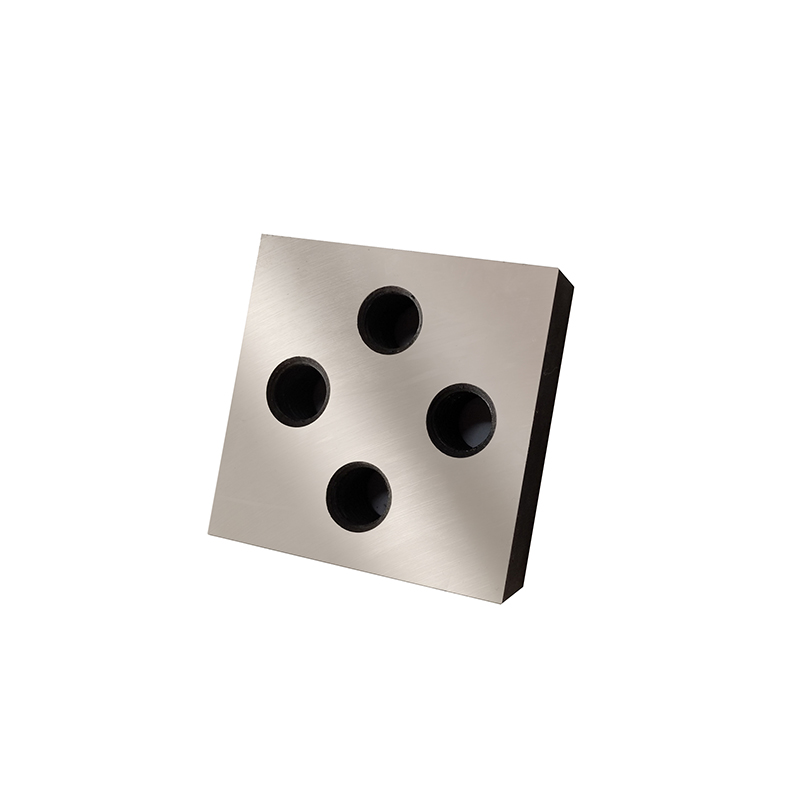
Shear Blades, as the core cutting tool for cutting metal and non-metal materials, are widely used in multiple industries such as metallurgy, machinery manufacturing, construction, and packaging. With precise blade design, excellent hardness and wear resistance, it can achieve efficient cutting of various materials such as plates, profiles, paper, rubber, etc., and is a key component to ensure processing accuracy and production efficiency. The shear requirements under different working conditions have differentiated requirements for the material, structure, and processing technology of Shear Blades, and their performance directly affects the overall processing quality and stability of the production process.
The working principle of a shearing blade is essentially to use a pair of precisely matched cutting edges, or a single cutting edge in combination with an anvil, to apply concentrated stress to the material that exceeds its own shear strength, thereby achieving material separation. This process may seem simple and straightforward, but the performance requirements for the blade itself are extremely strict. It not only needs to be hard enough to maintain the sharpness of the blade and avoid rapid passivation; At the same time, it must have good toughness to withstand intermittent or continuous impact loads, preventing blade breakage or fracture. In addition, the geometric shape, cutting edge angle, gap setting and other parameters of the blade directly determine the quality, accuracy and required shear force of the cutting surface, which affects the quality and processing efficiency of the final product.

In practical application scenarios, the adaptability and reliability of Shear Blades are fully demonstrated. In the metallurgical industry, it is used to shear metal profiles such as steel plates and coils, which require high strength shear loads and extremely high requirements for the wear resistance and toughness of the blades; In the field of mechanical manufacturing, it is suitable for equipment such as punching and shearing machines and shearing machines to achieve precise cutting in component processing; In the construction industry, it is used to cut building materials such as steel bars and aluminum alloy profiles to ensure the dimensional accuracy of construction materials; The packaging industry uses specialized Shear Blades to cut packaging materials, meeting the efficient operational requirements of automated production lines. In addition, Shear Blades also play an indispensable role in sub sectors such as hardware processing and automotive parts manufacturing.
The design and manufacturing accuracy of blades is another key dimension. The cutting edge angle needs to be optimized according to the thickness and hardness of the material being cut: softer and thinner materials can use smaller angles to obtain a sharper cutting sensation; Materials that are harder and thicker require larger angles to enhance blade strength. The adjustment of the gap between blades is the core of precision cutting. If the gap is too small, it will increase wear and energy consumption. If the gap is too large, it will cause the material to bend and tear instead of cutting cleanly and cleanly. For disc cutting or rotary cutting, the dynamic balance and installation concentricity of the blade require extremely high precision. Any small deviation may cause vibration during high-speed operation, affecting the cutting quality and damaging the equipment. Therefore, every process from raw material forging, precision machining to final blade grinding and polishing requires a very high level of process control.
With the upgrading of processing technology, the material process and design of Shear Blades are constantly optimized, gradually developing towards high precision, high wear resistance, and long service life. Its stable performance in various cutting and processing scenarios provides important support for the efficient promotion of industrial production, becoming a key cutting tool connecting raw material processing and finished product manufacturing, adapting to the diversified cutting needs of different industries, and assisting in the standardization and efficiency of production processes.