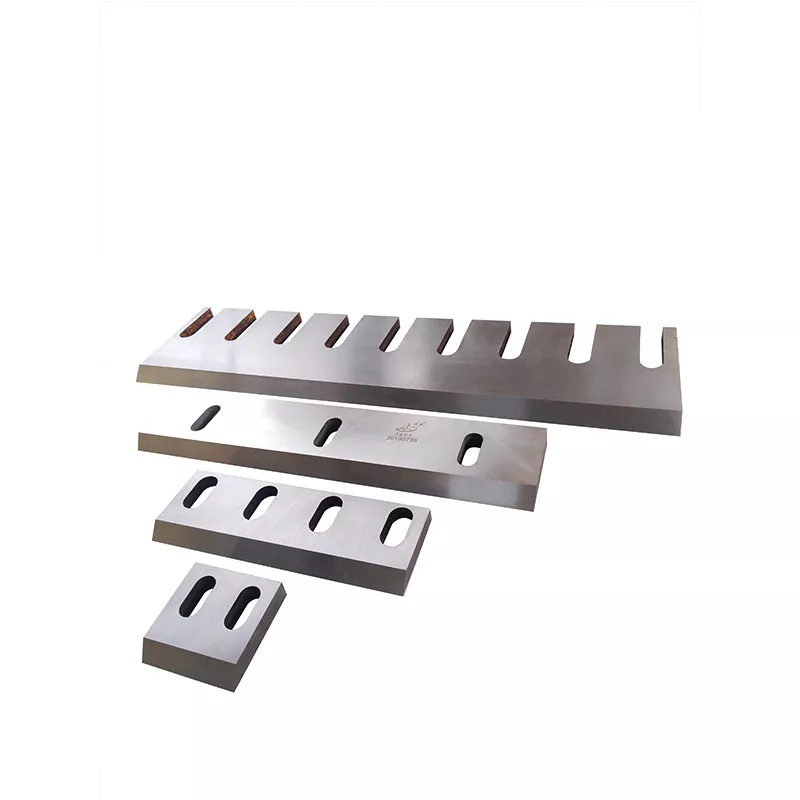
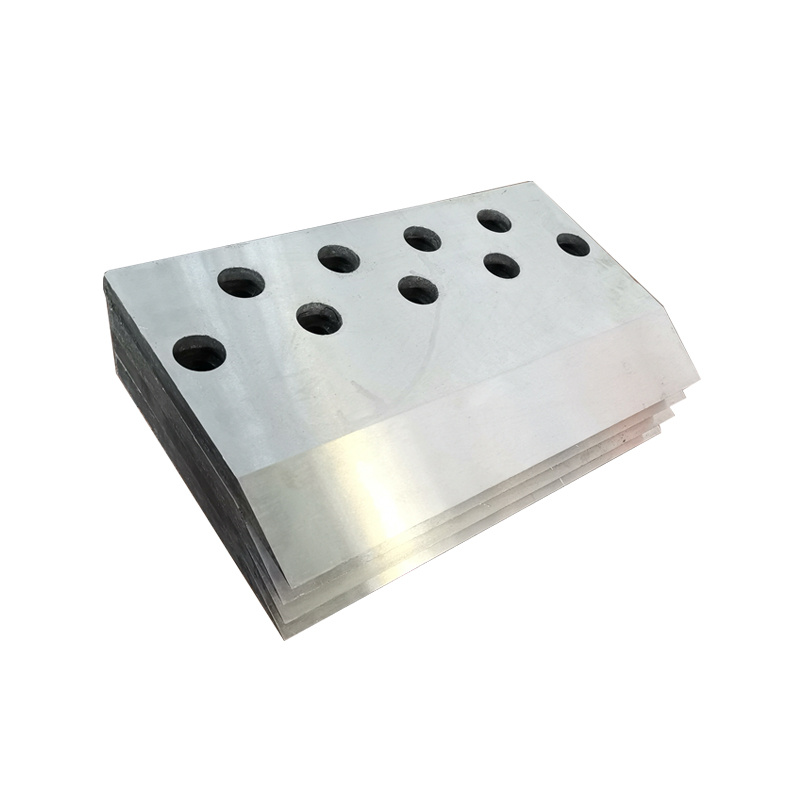
A sharp blade feels like the answer to everything. But on corrugated board, sharpness only gets you halfway. The flute structure inside the board is mostly air. If the blade is too thin for the caliper, it will flex or wander, and the cut edge gets ragged. If the blade is too thick, it acts like a w
Ask five operators what makes a good set of blades and you will hear five different answers, but one word comes up almost every time: hardness. It sounds simple — the harder the blade, the better it cuts, right? Not quite. In real crushing work, hardness is a balancing act. Go too soft and the cutti
The fastest way to kill a set of Single Shaft Shredder Blades is to run material the machine was not set up for. Every shredder has a design range, and it is not about one bad piece. It is about running oversize, contaminated, or extra hard material day after day. Steel, concrete, and heavy mineral
The Cutting Quality Drops NoticeablyThe easiest sign to spot is the output. Fresh blades tear through material and leave clean, even chips. Dull ones crush and beat the wood instead of slicing it, so you get ragged pieces, splinters, and fines mixed together. If the machine is producing more dust an
Plastic granulation blades work under high-speed, high-friction conditions every day. They continuously cut and crush various plastic materials, including soft film, hard plastic blocks, and recycled materials with tiny impurities. Without regular care, blade edges will wear down quickly, develop mi
As the vibrant month of October arrives, we welcome China’s National Day, a time that symbolizes continuous industrial progress, technological innovation and steady global development. For manufacturing enterprises like Huaxin, this special occasion inspires us to keep improving craftsmanship, upgra
Autumn is the season of harvest and fruition, and the full Mid-Autumn moon symbolizes dedication, wholeness and lasting partnership. As this traditional Chinese festival arrives, Huaxin sends sincere seasonal greetings to every global customer, cooperative partner and industry friend who has walked
Many factory operators assume granulator blades chip simply because they wear out over time. In fact, premature chipping usually stems from three controllable factors: foreign substance impact, incorrect blade clearance settings, and mismatched blade material hardness. These issues affect almost all
Staple fiber manufacturing features high-speed continuous operation, repeated friction and fine fiber debris accumulation. Unlike general cutting tools used for metal or paper processing, fiber cutting tools need outstanding wear resistance, stable edge retention and anti-adhesion performance. A low
Heavy-duty industrial cutting tasks involve thick metal plates, continuous batch processing, and long-hour non-stop operation. Unlike ordinary light-duty cutting tools, heavy-duty shear blades bear huge impact force, friction and pressure in every cutting cycle. A one-time sharp cutting effect canno
You got a set of blades back from the grinder once and they cut worse than before? Yeah, that happens. Sharpening shredder blades is one of those jobs that looks simple until you're standing over a wheel with a piece of steel that costs more than your grinder.I've ruined my share of edges over the y
You're feeding branches into the chipper and the chips coming out look wrong. Stringy, torn, uneven. The machine sounds like it's working twice as hard as it should, and every now and then a branch stalls and you have to push. You tell yourself you'll deal with the blades next weekend. Then next wee
Every crushing plant operator knows how frustrating unexpected equipment downtime can be. A sudden blade wear, crack, or breakage can halt entire production lines, delay project timelines, and pile up unnecessary maintenance and replacement costs. Most operational stops in mineral processing, constr
Industrial waste recycling covers a wide range of materials, from soft plastic and paper to tough metal scraps, rigid wood, and mixed construction waste. Each material type creates different levels of stress on shredder blades. Unlike uniform crushing work, recycling materials are often messy, uneve
Stainless steel is far harder to process than ordinary carbon steel. It features high tensile strength, poor thermal conductivity and severe work hardening during shearing. These unique properties mean blade condition directly determines finished product quality. A qualified shearing machine blade f