


Views: 0 Author: huaxin blade Publish Time: 2026-08-04 Origin: Site


Most people assume sharpening only requires polishing the blade edge until it feels sharp. However, wood chipper blades have strict factory angle standards that directly determine cutting efficiency and structural durability. Random grinding will change the original bevel angle, leading to poor wood splitting effect and frequent blade passivation.
Over-grinding is another common mistake. Removing too much metal material during sharpening thins the blade body, reduces overall hardness, and makes the blade prone to chipping or cracking when hitting hard wood knots or gravel. A set of standard wood chipper blades can be reused multiple times with correct sharpening methods, effectively saving replacement costs for landscaping and industrial users.
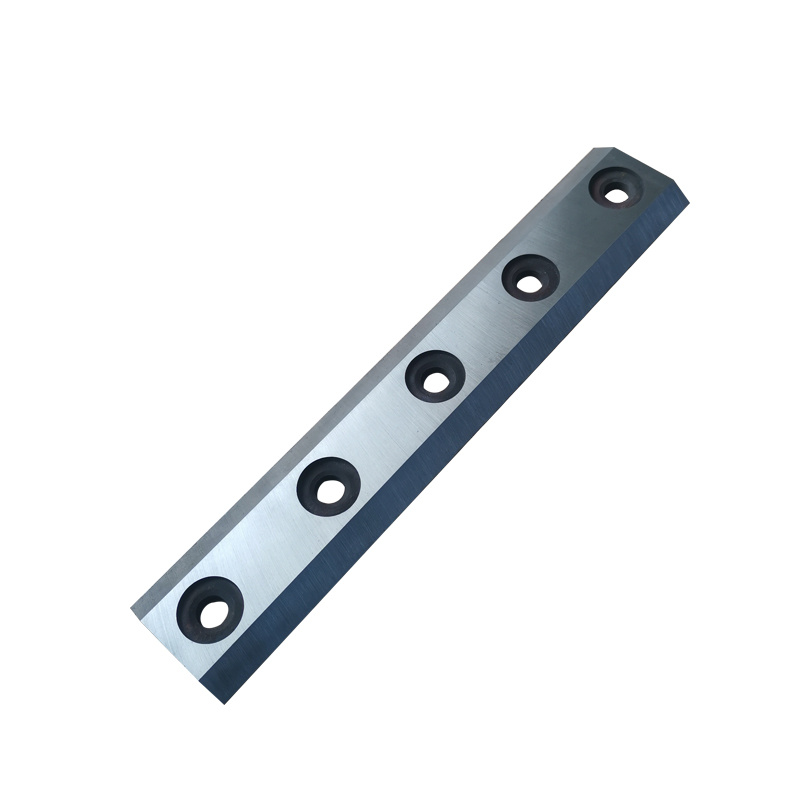
Before starting any sharpening work, complete safety preparation and confirm core blade parameters to avoid operational errors. Different types of chippers correspond to exclusive blade bevel angles, grinding thickness limits and tolerance ranges. Adhering to these standard data ensures the blades maintain factory-level cutting performance after polishing.
The following industry-standard parameter table covers mainstream portable and industrial models, providing accurate reference for daily sharpening operations:
Chipper Blade Type | Standard Bevel Angle | Max Single Grinding Depth | Allowable Tolerance | Applicable Scenario |
|---|---|---|---|---|
Portable Home-use Blades | 28°–30° | 0.3mm | ±1° | Garden & small landscaping work |
Commercial Landscaping Blades | 30°–32° | 0.4mm | ±1° | Daily tree branch processing |
Heavy-Duty Industrial Blades | 32°–35° | 0.5mm | ±2° | Large log & mass wood processing |
Always power off the machine and disconnect the power source before disassembly. Remove the blades carefully and clear all wood residue, resin, and dirt on the blade surface with a professional cleaning agent. Residual sticky debris will affect grinding accuracy and cause uneven sharpening. Inspect the blade surface for cracks, pits or severe wear; replace damaged blades directly instead of sharpening.
Use a professional blade fixture to fix the blade stably and adjust the grinding machine angle according to the corresponding parameter standard. Never hold the blade by hand for grinding, which poses huge safety risks and causes angle deviation. Keeping a stable bevel angle is the core to retain original cutting performance.
Perform low-speed uniform grinding along the blade edge, strictly controlling the single grinding depth to avoid over-polishing. After grinding, use fine sandpaper to remove tiny burrs on the edge. Do not polish the edge too smoothly, as a proper micro-tooth structure helps improve wood chipping efficiency.
Unbalanced blades will cause machine vibration and noise during operation. Conduct dynamic balance detection after sharpening to ensure consistent weight on both sides of the blade. Reinstall the blades and tighten the fixing bolts evenly to avoid loose installation affecting operation safety.
Many well-sharpened blades still deliver poor chipping results due to neglected details. First, never change the original blade radian and bevel angle blindly. Factory angles are designed based on material cutting mechanics, and arbitrary adjustment will reduce cutting speed and increase blade wear.
Second, control the total grinding times. Each sharpening removes a small amount of metal, and excessive repeated grinding will thin the blade and reduce impact resistance. When the blade edge appears obvious thinning or deformation, replace it in time to avoid safety hazards.

For daily home and garden use, sharpening every 3 to 4 months is sufficient. For commercial and industrial continuous operation, check and sharpen the blades every 2 to 4 weeks. Timely polishing avoids dull blades increasing machine load.
Hand filing is not recommended for formal maintenance. It cannot guarantee accurate angle control and uniform grinding thickness, which will easily lead to unbalanced blades and reduced cutting efficiency. Professional grinding tools are more reliable for long-term use.
Slight uniform burrs are normal and beneficial for wood cutting. Excessive burrs need to be polished gently, but avoid over-smoothing the edge, which will weaken the blade’s grabbing force on wood branches.
Quick passivation is mainly caused by incorrect grinding angles, over-grinding, or failure to clean gravel and hard impurities in wood materials. Standard sharpening and pre-work material screening can effectively extend blade sharpness retention time.
In short, safe and standard sharpening is the best way to maintain the working performance of your equipment. Mastering professional angle standards and operating steps can make your wood chipper blades keep efficient cutting ability for a long time, reduce frequent replacement costs, and make your wood processing work more labor-saving and efficient.


