Views: 0 Author: Site Editor Publish Time: 2025-12-16 Origin: Site


In the fields of biomass energy utilization and wood processing, the wood chipper blades
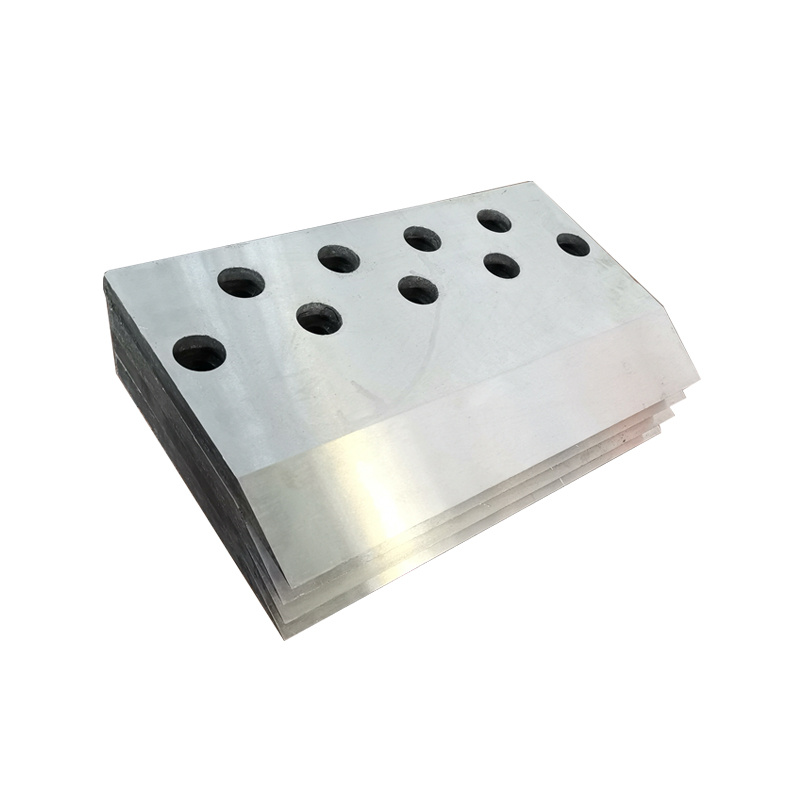
is a key equipment for processing raw materials such as logs, branches, and straw into wood chips. Its cutting efficiency and processing quality directly depend on the core component - the wood chip machine blade. The blade of the wood chip machine plays an irreplaceable role in forestry resource recovery, biomass power generation, and artificial board production due to its sharp cutting edge, excellent wear resistance, and stable structural strength. It has become an important processing carrier connecting raw materials and finished products, promoting the efficient development of the forestry and biomass industries.
The geometric design of wood chipper blades is the process of transforming cutting theory into physical reality. The blade angle is the most basic design parameter: a smaller rake angle is advantageous for cutting into wood fibers, but requires greater driving power; Cutting with a larger front angle is more labor-saving, but requires higher blade strength. Designers need to find the optimal balance between the type of wood, equipment power, and expected efficiency.
The blade contour design is also full of ingenuity. The straight blade has a simple structure and is easy to maintain; Curved or wavy cutting edges can generate axial force during cutting, promoting the movement of wood towards the discharge port and preventing blockage. In the multi blade combination design, the arrangement angle, overlap amount, and installation phase of the blades are carefully calculated to ensure that each blade can participate in cutting evenly, avoiding single blade overload and reducing equipment vibration.

Wear resistance and service life are the core evaluation indicators of wood chip machine blades. During the wood processing, the blade needs to be in long-term contact with wood fibers and impurities (such as sand, stone, and metal debris), enduring continuous friction and impact. Insufficient wear resistance can lead to rapid wear of the cutting edge, which not only reduces cutting efficiency but also increases the frequency of blade replacement and processing costs. High quality wood chip machine blades can form a high hardness wear-resistant layer on the cutting edge by optimizing the material composition and heat treatment process, while ensuring that the blade body has good toughness, balancing wear resistance and impact resistance. Some blades will also adopt surface coating technology, depositing wear-resistant coatings on the cutting edge surface to further enhance wear resistance, extend service life, and adapt to large-scale and continuous wood processing needs.
With the refinement of application scenarios, woodworking cutting tools have also shown a trend of specialized development. The blade used to handle fresh tree branches requires stronger corrosion resistance and a design to prevent fiber entanglement; The blades used for crushing and recycling construction wood require higher wear resistance to cope with possible sand and stone pollution; The blades used for fine sawdust production have stricter standards for blade precision and surface smoothness.
Environmental temperature changes can also affect blade performance. When working in cold regions, blade materials need to have better low-temperature toughness; In tropical regions, attention should be paid to the ability to maintain hardness at high temperatures. This meticulous consideration of the usage environment demonstrates the humanistic care in engineering design.
With the deepening of environmental protection concepts and the rapid development of the biomass industry, the direction of technological upgrading for wood chip machine blades is becoming increasingly clear. On the one hand, in response to the diversity of biomass raw materials, specialized blade research and development is accelerating. By optimizing the blade structure and material, it adapts to the cutting needs of different raw materials such as straw, branches, and hardwood; On the other hand, the concept of green manufacturing promotes the optimization of blade production processes, reducing environmental pollution during the production process by improving raw material utilization and adopting environmentally friendly heat treatment processes. In addition, the application of intelligent detection technology makes blade quality control more precise, enabling comprehensive testing of blade hardness, edge accuracy, and wear resistance, ensuring the stability of product quality.
In today's world where resource recycling is increasingly valued, the role of woodworking tools is also undergoing subtle changes. It is no longer just a tool for reducing the volume of wood, but also the first process of renewable resource production lines such as biomass energy, garden coverings, and papermaking raw materials. Every improvement in blade performance means lower energy consumption, more uniform finished products, and higher resource conversion efficiency.
Although wood chip machine blades are small industrial components, they carry the important mission of efficient utilization of forestry resources and the development of biomass industry. It provides core support for various wood processing scenarios with excellent cutting performance and stable wear-resistant quality, promoting the recycling of resources and the development of green economy. In the wave of industrial upgrading, wood chip machine blades will continue to optimize performance through technological innovation, adapt to more diverse processing needs, and inject momentum into the high-quality development of forestry and biomass industries.